AI model could help accelerate autism diagnoses
Top Story
By: Gabrielle Mostello
Ref: University of Plymouth, eClinicalMedicine
Published: 09/19/2025
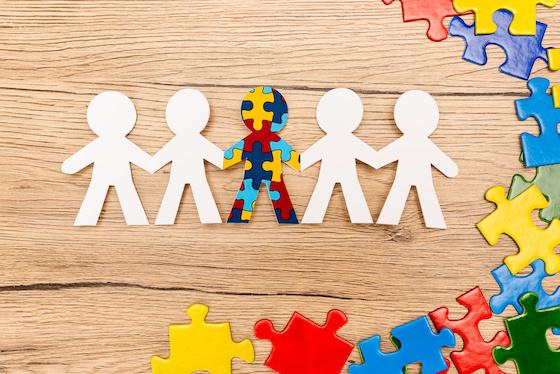
An AI model developed by researchers at the University of Plymouth could help speed up the diagnosis of autism spectrum disorder (ASD), prioritising patients for assessment and helping tailor their treatments. A study published in eClinicalMedicine reports that the model, which analyses resting-state functional MRIs, achieved up to 98% cross-validated accuracy for ASD.
While autism diagnoses have risen significantly over the past two decades, the diagnostic process remains slow and resource-intensive.
"Because diagnosis still depends on a specialist, in-person behavioural evaluation, the journey to a confirmed decision can take many months — and, in some areas, years," noted study supervisor Amir Aly. "Our work shows how AI can help: not to replace clinicians, but to support them with accurate results and clear, explainable insights."
The model was developed using functional connectivity data from the Autism Brain Imaging Data Exchange dataset, which includes 884 participants aged seven to 64 years across 17 sites. To evaluate performance, the team applied standard data processing methods, followed by a comparison of different techniques to explain the model's decisions. Gradient-based methods outperformed others, producing consistent brain activity maps that identified the same regions as key drivers of the model's predictions.
"The biggest surprise was consistently identifying visual processing regions (particularly the calcarine sulcus and cuneus) as critical biomarkers across all preprocessing pipelines," said lead study author Suryansh Vidya. "When we validated our findings against independent genetic studies, the results confirmed that we'd identified genuine neurobiological markers rather than dataset artifacts."
The findings align with research across several disciplines suggesting that early visual processing differences may contribute to broader ASD symptoms, such as challenges with social interaction, attention, eye contact and language development.
Looking ahead, study co-author Kush Gupta plans to expand the work by testing different machine learning models and incorporating more diverse datasets.
"The aim is to develop a robust and generalisable AI-driven diagnostic model that can reliably support clinicians worldwide," he said.